A COMMUNICATIONS & MEDIA CONSULTING AGENCY
Based in Murrieta/Southern California, specializing in
Strategic Communication, Capacity Building Training, and Creating Organizational Change through Strategic Communication.
Strategic Communication, Capacity Building Training, and Creating Organizational Change through Strategic Communication.
CONSULTING . COMMUNICATING . FACILITATING
Adding Value to Personal and Professional Transformation
Adding Value to Personal and Professional Transformation

VISION
To be the trusted and preferred business partner in providing optimized solutions for communication needs |

MISSION
To influence transformation for organizational efficiencies over people, processes, and performance |

VALUE COMMITMENT
To impact quality outcomes and overall wellbeing of people, processes, and performance |
OUR CLIENTS
On-Site and Remote facilitation available for clients in Public Sector, Private Sector, Education Institutions, Non-Profit Organizations, Professional Services & Law Firms, Manufacturing Sector, Healthcare Sector, Local Government, International Entities, Executives, Management Teams & Board members.
Let us be your partners in finding strategic solutions for your communication
needs and wellbeing of your organization.
On-Site and Remote facilitation available for clients in Public Sector, Private Sector, Education Institutions, Non-Profit Organizations, Professional Services & Law Firms, Manufacturing Sector, Healthcare Sector, Local Government, International Entities, Executives, Management Teams & Board members.
Let us be your partners in finding strategic solutions for your communication
needs and wellbeing of your organization.
A video montage of our services
Our focus is on effective and strategic communication as a means for connection and transformation in social environment. Communication is the essence of human life. Effective Communication is the art and science of human interactions. It is an integral component to an organization's success and competitive edge. We are your strategic partners in developing and facilitating effective communication solutions that will support your organization needs.
Our service delivery includes facilitating Bespoke Trainings for organizations and professionals for growth and development virtually and on location as needed; Formulating and Producing Communication Strategies and Campaigns that Influence Measurable Outcomes, Brand Development and Management, Crisis and Reputation Management, Enterprise Risk Management, Digital Analytics, Consumer Insights, Content Development, Media Production, and Executive Consulting.
Our service delivery includes facilitating Bespoke Trainings for organizations and professionals for growth and development virtually and on location as needed; Formulating and Producing Communication Strategies and Campaigns that Influence Measurable Outcomes, Brand Development and Management, Crisis and Reputation Management, Enterprise Risk Management, Digital Analytics, Consumer Insights, Content Development, Media Production, and Executive Consulting.
Why Strategic Communication is Important in A Business Organization.
1. Employee Engagement 2. Boosting Productivity 3. Eliminating Workplace Silos
4. Effective Internal and External Communication 5. Motivates Employees to Stay
6. Efficient Tool in Value Delivery 7. A Tool for Promoting Organizational Culture.
1. Employee Engagement 2. Boosting Productivity 3. Eliminating Workplace Silos
4. Effective Internal and External Communication 5. Motivates Employees to Stay
6. Efficient Tool in Value Delivery 7. A Tool for Promoting Organizational Culture.
COMPLEMENTARY RESOURCE
|
|
International Corporate Projects & Case Studies:
CULTURAL CAPACITY BUILDING TRAINING: HIGHER EDUCATION STUDENTS' LOANS BOARD IN TANZANIA
Case Study: Enhancing HESLB's Cultural Competence for Improved Service Delivery.
The organization: Tanzania's higher education student loans provider. The organization constantly interact with students from diverse backgrounds across all regions in Tanzania.
The Challenge: Prior training, challenges included adopting to evolving student demographics, ineffective communication and collaboration between staff and students, Silos within the organization, and fragmentation between upper and middle management, the need to enhance external partnerships as well as internal collaboration.
Our Intervention Approach:
Provided training that focused on understanding cultural dimensions, identifying and mitigating bias, effective cross-cultural communication, building inclusive environments, conflict resolution in diverse setting, case studies and role playing.
Conclusion:
The partnership between HESLB and our company in delivering the Cultural Capacity Building training has proven to be a strategic investment. By equipping its managers with enhanced cultural understanding and practical skills, HESLB is better positioned to fulfill its vital mandate in a culturally rich and diverse Tanzania. This initiative not only strengthens internal cohesion but also significantly enhances HESLB's ability to serve its primary beneficiaries – the students – with greater empathy, effectiveness, and equity, ultimately contributing to the nation's educational and socio-economic development.
The organization: Tanzania's higher education student loans provider. The organization constantly interact with students from diverse backgrounds across all regions in Tanzania.
The Challenge: Prior training, challenges included adopting to evolving student demographics, ineffective communication and collaboration between staff and students, Silos within the organization, and fragmentation between upper and middle management, the need to enhance external partnerships as well as internal collaboration.
Our Intervention Approach:
Provided training that focused on understanding cultural dimensions, identifying and mitigating bias, effective cross-cultural communication, building inclusive environments, conflict resolution in diverse setting, case studies and role playing.
Conclusion:
The partnership between HESLB and our company in delivering the Cultural Capacity Building training has proven to be a strategic investment. By equipping its managers with enhanced cultural understanding and practical skills, HESLB is better positioned to fulfill its vital mandate in a culturally rich and diverse Tanzania. This initiative not only strengthens internal cohesion but also significantly enhances HESLB's ability to serve its primary beneficiaries – the students – with greater empathy, effectiveness, and equity, ultimately contributing to the nation's educational and socio-economic development.
CUSTOMER CENTRICTY TRAINING IN TANZANIA, EAST AFRICA
Case Study: Bayport Financial Services Tanzania: A Shift to Customer-Centricity in the Call Center
Background:
Bayport Financial Services Tanzania, a leading financial services provider, recognized a critical need to evolve its call center operations. Previously, the focus had been overwhelmingly on strictly number-driven results, such as the number of calls handled per hour, average handling time, and sales quotas.
The Challenge: While these metrics provided a clear measure of efficiency, they inadvertently led to several negative consequences: poor customer service due to rushed interactions, a decline in customer satisfaction, and a significant increase in employee burnout and turnover among call center staff. The company sought to transition to a customer-centric approach, believing that a focus on genuine customer needs and satisfaction would ultimately lead to improved long-term performance and a more sustainable work environment. Our services were engaged to deliver specialized training on Customer Centricity to the entire call center team.
Our Intervention Approach:
The comprehensive training program, delivered by thedmassgroup.com, focused on equipping call center staff with the skills and mindset necessary to deliver exceptional customer experiences. Key modules included:
The investment in customer-centricity training with our company proved to be a transformative initiative for Bayport Financial Services Tanzania's call center. By shifting away from a purely numbers-driven approach and empowering staff to genuinely connect with and support customers, Bayport not only improved its customer service delivery and satisfaction levels but also fostered a more positive and productive work environment for its employees. This case study demonstrates that a customer-centric model, even in a high-volume environment like a call center, can lead to significant and sustainable improvements in both customer loyalty and business performance.
Background:
Bayport Financial Services Tanzania, a leading financial services provider, recognized a critical need to evolve its call center operations. Previously, the focus had been overwhelmingly on strictly number-driven results, such as the number of calls handled per hour, average handling time, and sales quotas.
The Challenge: While these metrics provided a clear measure of efficiency, they inadvertently led to several negative consequences: poor customer service due to rushed interactions, a decline in customer satisfaction, and a significant increase in employee burnout and turnover among call center staff. The company sought to transition to a customer-centric approach, believing that a focus on genuine customer needs and satisfaction would ultimately lead to improved long-term performance and a more sustainable work environment. Our services were engaged to deliver specialized training on Customer Centricity to the entire call center team.
Our Intervention Approach:
The comprehensive training program, delivered by thedmassgroup.com, focused on equipping call center staff with the skills and mindset necessary to deliver exceptional customer experiences. Key modules included:
- Understanding the Customer Journey: Emphasizing empathy and active listening to identify customer needs beyond the immediate transaction. Effective Communication & De-escalation: Strategies for clear, concise, and compassionate communication, even in challenging situations.
- Problem-Solving & Solution-Oriented Thinking: Empowering agents to take ownership of customer issues and find effective resolutions.
- Building Rapport & Trust: Techniques for fostering positive relationships with customers.
- Internal Collaboration for External Success: Highlighting the importance of teamwork to ensure seamless customer service.
- The "Why" Behind Customer Centricity: Connecting customer satisfaction directly to company success and individual job satisfaction.
The investment in customer-centricity training with our company proved to be a transformative initiative for Bayport Financial Services Tanzania's call center. By shifting away from a purely numbers-driven approach and empowering staff to genuinely connect with and support customers, Bayport not only improved its customer service delivery and satisfaction levels but also fostered a more positive and productive work environment for its employees. This case study demonstrates that a customer-centric model, even in a high-volume environment like a call center, can lead to significant and sustainable improvements in both customer loyalty and business performance.
Public Service Social Security Fund (PSSSF): Strengthening Communication for QMS Adoption at PSSSF, Tanzania
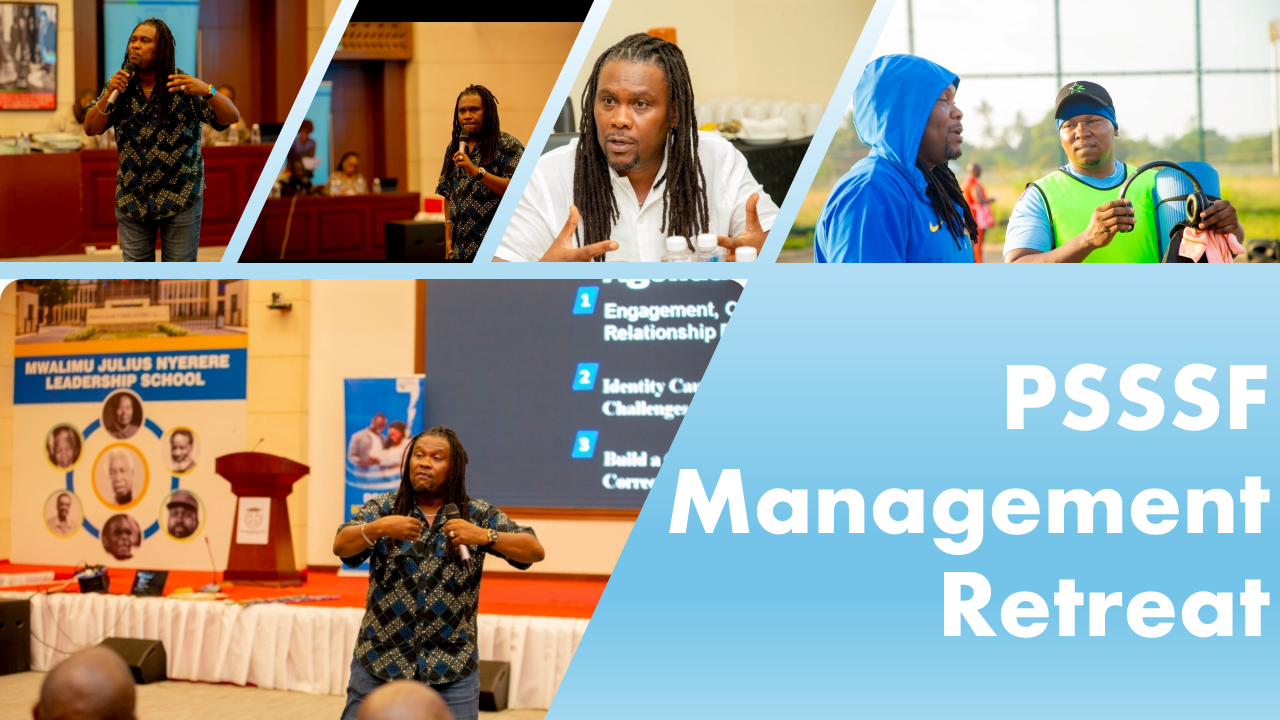
Case Study: Strengthening Communication for QMS Adoption at PSSSF, Tanzania
Background:
The Public Service Social Security Fund (PSSSF) is a vital government institution in Tanzania, responsible for managing the social security contributions and benefits of public servants. As a key player in the nation's social welfare, PSSSF aims for operational excellence and robust service delivery to its members. In line with this commitment, PSSSF embarked on a journey towards achieving ISO 9001:2015 Quality Management System (QMS) compliance. They hired Zillic Inc for the task.
The Challenge:
Zillic Inc audit report was comprehensive and pointed out various challenges. It was apparent that PSSSF would experience an uphill task in adopting a new QMS as comprehensive as ISO 9001:2015. The following challenges were anticipated:
- Resistance to Change: Employees accustomed to existing procedures might resist new processes and documentation required by the QMS.
- Lack of Understanding: Without clear communication, employees might not fully grasp the benefits of QMS adoption or their role in its success.
- Siloed Communication: In a large public institution, communication can often be fragmented, leading to inconsistencies and misunderstandings regarding new policies and procedures.
- Maintaining Public Trust: As a public service entity, PSSSF needed to ensure that the QMS implementation did not disrupt service delivery or erode public confidence.
- Reputational Risks: Inadequate communication during a period of significant organizational change could expose PSSSF to reputational damage.
- Strategic Alignment: Ensuring that the QMS adoption was not just a compliance exercise but truly aligned with PSSSF's broader strategic objectives was critical.
We designed and delivered a tailored awareness training program for PSSSF, focusing on key communication areas essential for successful QMS adoption and organizational excellence. The training addressed the following specific objectives:
Strategic Communication Plan as a Key Deliverable for QMS Adoption:
Activity: Training sessions focused on the methodology of developing a comprehensive strategic communication plan. Participants learned to identify key stakeholders, define communication objectives related to QMS, select appropriate channels, and establish clear messaging frameworks. The plan was positioned as a living document to guide all QMS- related communications.
Impact: Empowered PSSSF to proactively manage information flow regarding QMS, ensuring that all communications were purpose-driven and aligned with the adoption goals.
Facilitate Change Management for ISO 9001:2015 Compliance:
Activity: Sessions covered change communication models and strategies, specifically tailored to the context of ISO 9001:2015 adoption. This included identifying change champions, managing resistance, communicating the "why" behind the change, and celebrating early successes to build momentum. The training also highlighted the importance of linking QMS compliance to PSSSF's overall strategic objectives.
Impact: Equipped PSSSF leadership and communication teams with the tools to guide employees through the transition smoothly, minimizing disruption and ensuring buy-in.
Conclusion:
The collaboration with the QSM Company Zillic Inc. highlights the critical role of strategic communication in successful organizational change and quality management system adoption. By investing in comprehensive communication awareness training and QSM Audit report and training, PSSSF proactively addressed potential hurdles, fostered a culture of transparency and engagement, and positioned itself for a more effective and sustainable implementation of ISO 9001:2015, ultimately reinforcing its commitment to serving the public servants of Tanzania with excellence. This case demonstrates that communication is not merely a supportive function but a strategic imperative for achieving organizational objectives, especially in complex environments like public service institutions
WORK ETHICS ONLINE TRAINING FOR TANZANIA MARKET I NIDHAMU YA KAZI